AI tools can help founders and lean startup teams complete recurring work with less manual effort. The strongest options address specific needs across planning, validation, marketing, sales, operations, finance, and execution.
This guide compares 15 active products using current official product information available in August 2026. Each tool was selected for a clear role, not simply because it includes a chatbot or uses AI in its marketing.
AI output still requires review. Users should verify important facts, protect sensitive information, respect applicable policies, and keep people responsible for consequential decisions.
Quick Picks
- Best for general assistance: ChatGPT
- Best for long documents and planning: Claude
- Best for source-linked research: Perplexity
- Best for knowledge and documentation: Notion AI
- Best for visual content: Canva AI
- Best for CRM-centered growth: HubSpot Agent Hub
- Best for workflow automation: Zapier
- Best for structured operations: Airtable
- Best for fast presentation creation: Gamma
- Best for e-commerce operations: Shopify Sidekick
- Best for business websites: Wix Harmony
- Best for bookkeeping workflows: QuickBooks Online
- Best for B2B prospecting: Apollo
- Best for meeting transcription: Otter.ai
- Best for project execution: ClickUp Brain
1. ChatGPT

 ChatGPTBest for entrepreneurs and startupsSee the Tool Details →
Best for: General assistance
ChatGPT supports writing, research, analysis, file-based work, brainstorming, and structured problem-solving across many workflows.
For founders and lean startup teams, it is most useful when its supported capabilities match a defined workflow and the result can be reviewed before it is used or published.
How founders and lean startup teams can use ChatGPT
- Draft structured content from notes.
- Summarize documents and conversations.
- Analyze uploaded information.
- Build reusable instructions for recurring work.
Main Benefit
Its main benefit is focused support for general assistance while keeping the work editable and subject to human review.
2. Claude

 ClaudeBest for entrepreneurs and startupsSee the Tool Details →
Best for: Long documents and planning
Claude is a general AI assistant for writing, analysis, research, coding, and document-heavy work that benefits from substantial context.
For founders and lean startup teams, it is most useful when its supported capabilities match a defined workflow and the result can be reviewed before it is used or published.
How founders and lean startup teams can use Claude
- Compare long documents.
- Develop detailed plans and briefs.
- Synthesize feedback and research.
- Create structured drafts for review.
Main Benefit
Its main benefit is focused support for long documents and planning while keeping the work editable and subject to human review.
3. Perplexity

 PerplexityBest for entrepreneurs and startupsSee the Tool Details →
Best for: Source-linked research
Perplexity searches current web information and produces synthesized answers with visible citations for follow-up verification.
For founders and lean startup teams, it is most useful when its supported capabilities match a defined workflow and the result can be reviewed before it is used or published.
How founders and lean startup teams can use Perplexity
- Research markets and competitors.
- Compare current options.
- Open and verify cited sources.
- Organize findings into a briefing.
Main Benefit
Its main benefit is focused support for source-linked research while keeping the work editable and subject to human review.
4. Notion AI

 Notion AIBest for entrepreneurs and startupsSee the Tool Details →
Best for: Knowledge and documentation
Notion AI works inside Notion pages, databases, projects, and team knowledge to support search, writing, summaries, and meeting notes.
For founders and lean startup teams, it is most useful when its supported capabilities match a defined workflow and the result can be reviewed before it is used or published.
How founders and lean startup teams can use Notion AI
- Create operating documents.
- Search approved workspace knowledge.
- Summarize project updates.
- Turn notes into tasks and decisions.
Main Benefit
Its main benefit is focused support for knowledge and documentation while keeping the work editable and subject to human review.
5. Canva AI

 Canva AIBest for entrepreneurs and startupsSee the Tool Details →
Best for: Visual content
Canva AI combines design templates with AI-assisted writing, image creation, editing, resizing, and presentation workflows.
For founders and lean startup teams, it is most useful when its supported capabilities match a defined workflow and the result can be reviewed before it is used or published.
How founders and lean startup teams can use Canva AI
- Create branded graphics.
- Prepare presentations and proposals.
- Resize approved designs for channels.
- Edit images and short videos.
Main Benefit
Its main benefit is focused support for visual content while keeping the work editable and subject to human review.
6. HubSpot Agent Hub

 HubSpot Agent HubBest for entrepreneurs and startupsSee the Tool Details →
Best for: CRM-centered growth
HubSpot connects AI assistance with CRM records across marketing, sales, service, content, and customer-data workflows.
For founders and lean startup teams, it is most useful when its supported capabilities match a defined workflow and the result can be reviewed before it is used or published.
How founders and lean startup teams can use HubSpot Agent Hub
- Research and summarize customer records.
- Draft contextual follow-ups.
- Support campaigns and lead workflows.
- Coordinate customer handoffs.
Main Benefit
Its main benefit is focused support for CRM-centered growth while keeping the work editable and subject to human review.
7. Zapier

 ZapierBest for entrepreneurs and startupsSee the Tool Details →
Best for: Workflow automation
Zapier connects business applications and adds triggers, actions, conditions, data transformation, and AI steps to repeatable workflows.
For founders and lean startup teams, it is most useful when its supported capabilities match a defined workflow and the result can be reviewed before it is used or published.
How founders and lean startup teams can use Zapier
- Move data between applications.
- Route requests by rules.
- Generate drafts from structured inputs.
- Automate notifications and follow-up tasks.
Main Benefit
Its main benefit is focused support for workflow automation while keeping the work editable and subject to human review.
8. Airtable

 AirtableBest for entrepreneurs and startupsSee the Tool Details →
Best for: Structured operations
Airtable combines shared records, forms, views, interfaces, automations, and AI-assisted actions for custom operational workflows.
For founders and lean startup teams, it is most useful when its supported capabilities match a defined workflow and the result can be reviewed before it is used or published.
How founders and lean startup teams can use Airtable
- Organize shared business records.
- Build intake forms and views.
- Classify and summarize records.
- Automate assignments and status changes.
Main Benefit
Its main benefit is focused support for structured operations while keeping the work editable and subject to human review.
9. Gamma

 GammaBest for entrepreneurs and startupsSee the Tool Details →
Best for: Fast presentation creation
Gamma turns prompts, outlines, and source material into editable presentations, visual documents, and web-based narratives.
For founders and lean startup teams, it is most useful when its supported capabilities match a defined workflow and the result can be reviewed before it is used or published.
How founders and lean startup teams can use Gamma
- Generate a first presentation draft.
- Convert reports into visual summaries.
- Restyle content for an audience.
- Share or export approved decks.
Main Benefit
Its main benefit is focused support for fast presentation creation while keeping the work editable and subject to human review.
10. Shopify Sidekick

Best for: E-commerce operations
Shopify Sidekick is an AI commerce assistant that works with store context to support products, campaigns, analysis, and administrative tasks.
For founders and lean startup teams, it is most useful when its supported capabilities match a defined workflow and the result can be reviewed before it is used or published.
How founders and lean startup teams can use Shopify Sidekick
- Draft product content.
- Review store questions and performance.
- Prepare promotions and campaigns.
- Get guided help with store tasks.
Main Benefit
Its main benefit is focused support for e-commerce operations while keeping the work editable and subject to human review.
11. Wix Harmony

Best for: Business websites
Wix Harmony combines conversational website generation with direct visual editing and access to Wix business features.
For founders and lean startup teams, it is most useful when its supported capabilities match a defined workflow and the result can be reviewed before it is used or published.
How founders and lean startup teams can use Wix Harmony
- Generate an initial site structure.
- Create service and information pages.
- Revise layouts and copy.
- Add relevant forms, bookings, or commerce.
Main Benefit
Its main benefit is focused support for business websites while keeping the work editable and subject to human review.
12. QuickBooks Online

Best for: Bookkeeping workflows
QuickBooks Online supports invoicing, transactions, reporting, bookkeeping organization, and AI-assisted financial administration.
For founders and lean startup teams, it is most useful when its supported capabilities match a defined workflow and the result can be reviewed before it is used or published.
How founders and lean startup teams can use QuickBooks Online
- Organize income and expenses.
- Prepare invoices and reminders.
- Review reports and unusual changes.
- Support bookkeeping review with an accountant.
Main Benefit
Its main benefit is focused support for bookkeeping workflows while keeping the work editable and subject to human review.
13. Apollo
 ApolloBest for entrepreneurs and startupsSee the Tool Details →
Best for: B2B prospecting
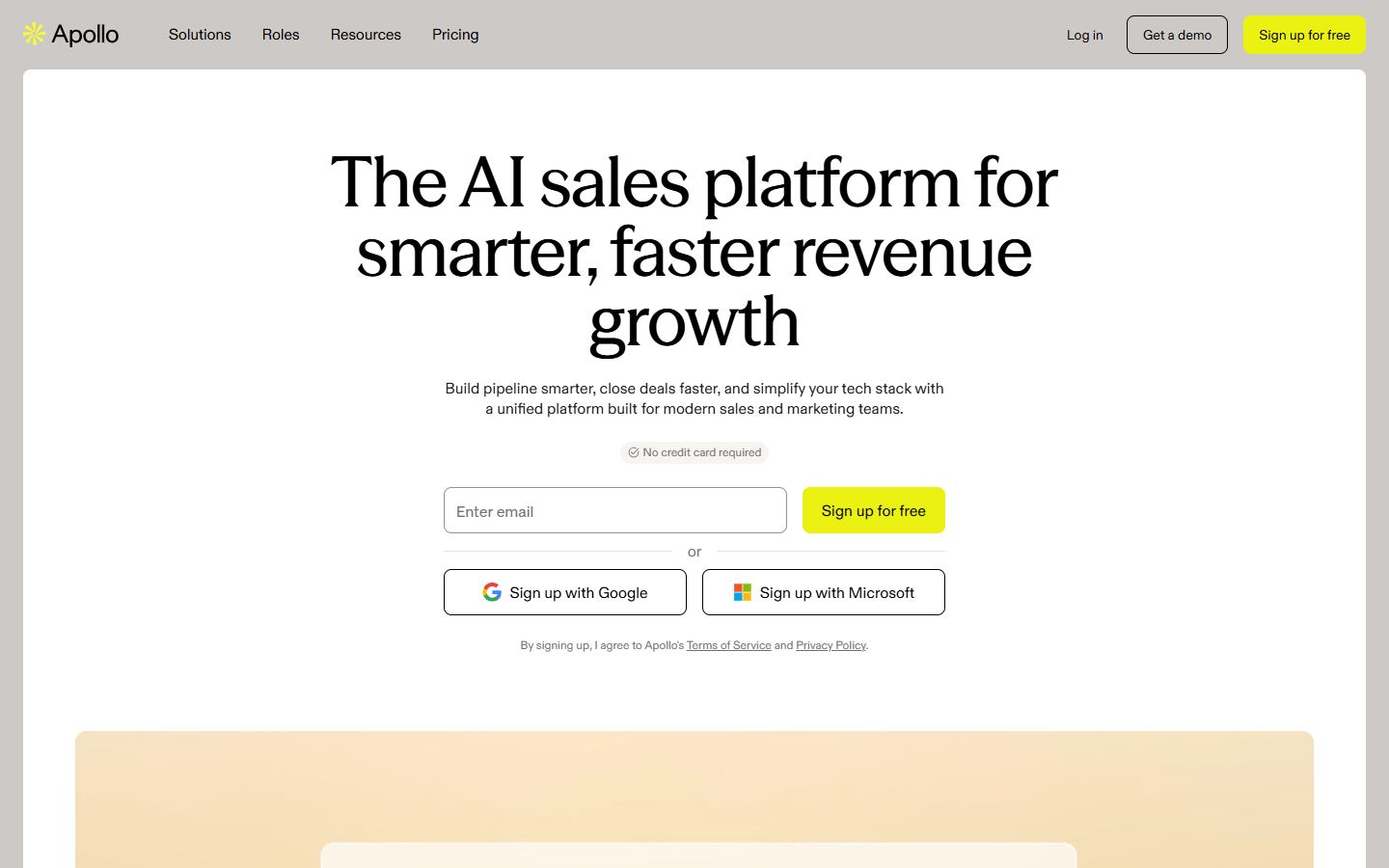
Apollo combines B2B prospect data, enrichment, sales engagement, sequences, and workflow support in one platform.
For founders and lean startup teams, it is most useful when its supported capabilities match a defined workflow and the result can be reviewed before it is used or published.
How founders and lean startup teams can use Apollo
- Build targeted prospect lists.
- Research accounts and contacts.
- Create multistep outreach sequences.
- Track engagement and follow-up.
Main Benefit
Its main benefit is focused support for B2B prospecting while keeping the work editable and subject to human review.
14. Otter.ai

 Otter.aiBest for entrepreneurs and startupsSee the Tool Details →
Best for: Meeting transcription
Otter.ai records and transcribes meetings, creates summaries, identifies action items, and makes conversations searchable.
For founders and lean startup teams, it is most useful when its supported capabilities match a defined workflow and the result can be reviewed before it is used or published.
How founders and lean startup teams can use Otter.ai
- Capture meeting transcripts.
- Create summaries and action items.
- Search prior conversations.
- Share notes with participants.
Main Benefit
Its main benefit is focused support for meeting transcription while keeping the work editable and subject to human review.
15. ClickUp Brain

 ClickUp BrainBest for entrepreneurs and startupsSee the Tool Details →
Best for: Project execution
ClickUp Brain applies AI to tasks, documents, comments, and project context to create, summarize, search, and organize work.
For founders and lean startup teams, it is most useful when its supported capabilities match a defined workflow and the result can be reviewed before it is used or published.
How founders and lean startup teams can use ClickUp Brain
- Turn notes into tasks.
- Summarize project activity.
- Draft briefs and updates.
- Find blocked or overdue work.
Main Benefit
Its main benefit is focused support for project execution while keeping the work editable and subject to human review.
How We Chose the Best AI Tools for Entrepreneurs And Startups
- Practical usefulness: The product needed to solve a recurring task for the intended audience.
- Source verification: Core capabilities and current positioning were checked against official product pages or documentation.
- Workflow fit: The tool needed a clear place in planning, validation, marketing, sales, operations, finance, and execution.
- Distinctive value: Specialized products were preferred when they handled a task better than a general assistant.
- Human control: The workflow needed to allow review, correction, or escalation before consequential use.
- Current availability: The selected product and its described core function were active when researched in August 2026.
How to Choose the Right AI Tool for Entrepreneurs And Startups
Start with the most expensive or repetitive bottleneck. For broad assistance, compare ChatGPT, Claude, Perplexity, Notion AI, Canva AI according to the source material and review controls required by the workflow.
When the need is more specialized, evaluate HubSpot Agent Hub, Zapier, Airtable, Gamma, Shopify Sidekick using a real sample task. Check whether the output is accurate, editable, and easy to integrate into the existing process.
Add tools such as Wix Harmony, QuickBooks Online, Apollo, Otter.ai, ClickUp Brain only when they address a separate need. Avoid paying for overlapping products that the team will not use consistently.
Tips for Using AI Tools Responsibly
- Review generated content, analysis, recommendations, and customer-facing messages before use.
- Verify facts, citations, calculations, dates, and current product information with reliable primary sources.
- Do not upload sensitive personal, financial, educational, customer, or confidential data without appropriate controls.
- Test automations with low-risk examples and define exception handling before enabling consequential actions.
- Keep people responsible for decisions involving customers, students, employees, finance, compliance, or safety.
- Measure whether the tool saves time or improves quality before expanding it to additional workflows.
Frequently Asked Questions
What is the best AI tool for entrepreneurs and startups?
The best starting point depends on the workflow. ChatGPT is the leading choice in this guide for general assistance, while specialized tools may be stronger for narrower tasks.
Are free AI tools useful for entrepreneurs and startups?
Free access can be useful for testing a workflow, but features and limits change. Confirm current official plan details and data controls before relying on a free tier for recurring or sensitive work.
How should I choose between general and specialized AI tools?
Use a general assistant for flexible drafting, research, and analysis. Choose a specialized product when the task depends on dedicated data, structured workflows, domain-specific controls, or integration with an existing system.
Can these AI tools automate complete workflows?
Some tools can automate multiple steps, but reliable automation requires stable inputs, permissions, monitoring, exception handling, and a human approval point for high-impact actions.
How many AI tools do I need?
Most users do not need all 15 products. Start with one broad assistant and one specialized tool for the highest-value bottleneck, then add another only when it solves a separate recurring problem.
Can AI replace professional judgment?
No. AI can accelerate routine work and surface useful options, but people remain responsible for accuracy, context, ethics, compliance, and decisions that materially affect others.
Final Thoughts
The best AI tools for entrepreneurs and startups are the ones connected to a clear workflow and reliable source material. Begin with a measurable task, review the result, and expand only when the tool consistently improves speed or quality.
Continue exploring: Business Management AI tools Business Research AI tools